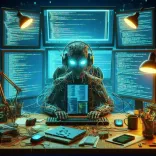
WorkClaw lets you deploy autonomous AI coworkers with job titles and cloud VMs directly into Slack. Are we finally getting replaced by bots?
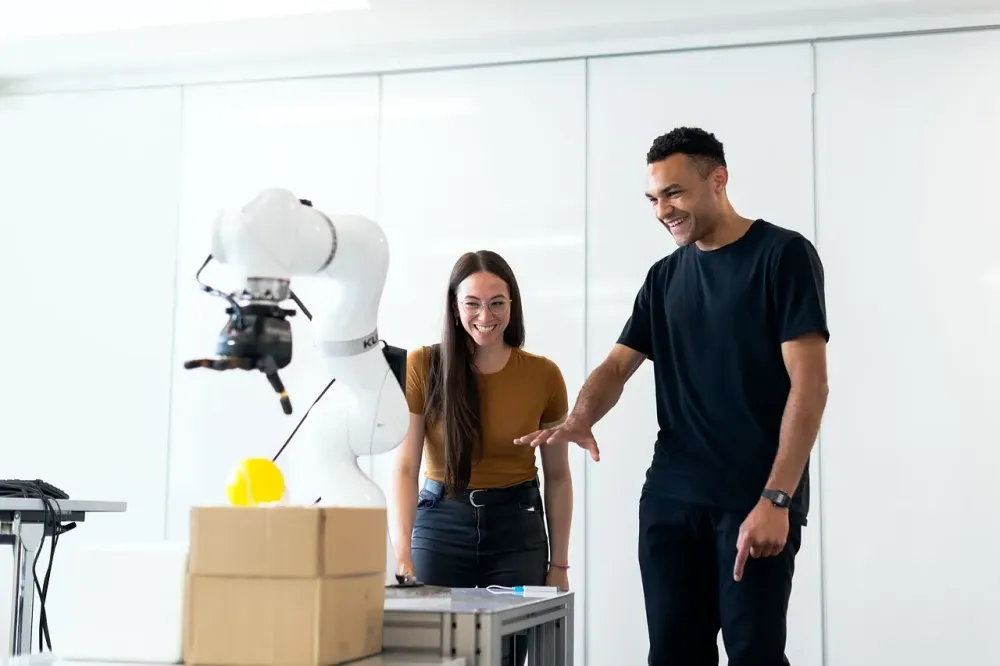
Ever wished you could mute your annoying coworkers in Slack and replace them with obedient, tireless bots? Well, the future is here, and it’s called WorkClaw. It recently launched on Product Hunt, racking up 284 upvotes, and it's already sparking a lot of debate among the dev community.
Unlike your typical ChatGPT window where you type prompts in isolation, WorkClaw introduces "AI coworkers" directly into your Slack or Microsoft Teams channels.
Each of these AI agents (aptly named 'Claws') gets:
The kicker? They can communicate with one another using "ClawChat" to coordinate complex tasks 24/7 without human intervention.
When asked if this was just a repackaged OpenClaw, the founder openly admitted they built upon the open-source library but fixed its critical flaws—specifically context drift, memory confusion, and access controls—while wrapping it all in a SOC 2 compliant environment for enterprise readiness.
The Product Hunt thread immediately hit the nail on the head regarding the chaotic nature of multi-agent systems.
One user pointed out the absolute nightmare of accountability: "If I deploy 10 Claws—one researching, one executing, one communicating—and something breaks, who takes the fall? You can't exactly cut an AI's salary or lock its account as punishment."
The WorkClaw team suggested a workaround: employing an "Orchestrator Claw" that manages the specialists and reports directly to human managers.
But Thomas Coleman (Founder of Luxcrypta) raised a solid point about governance: "The real challenge is continuity. When 10 Claws collaborate, each is a decision node. If something goes wrong downstream, you need a complete, replayable record of every decision in the chain. Without that, 'accountability' is just blame assignment after the fact."
Additionally, to prevent bots from stepping on each other’s toes, the team recommends giving them highly specialized roles (e.g., WriterClaw, RecruiterClaw) and calling them out by name in Slack just like you would with a human developer.
The era of simple prompt engineering is evolving into multi-agent orchestration. AI tools are no longer just assistants; they are becoming digital departments.
But here's the silver lining: these AI agents still need human babysitters. The bottleneck is no longer capability; it's governance, auditability, and ultimate decision-making. Instead of worrying about being replaced by a virtual worker running on a cheap cloud VM, learn how to design these workflows, manage the AI, and audit their outputs. After all, someone still has to take the blame when things go south!
Source: Product Hunt - WorkClaw